Barbecue, Pellet Smoker, Pork, Pork Ribs, Recipe
Smoking Pork Ribs on a Traeger Pellet Smoker
Sep
Smoking Pork Ribs on a Traeger Pellet Smoker
Quick answer: Smoke ribs unwrapped at 225°F until the bark is set and the color looks right, roughly 3-4 hours for baby back or 4-5 hours for spare ribs, spritzing with apple juice every 30-45 minutes after the first hour. Skip the classic 2-hour foil wrap; it oversteams pork ribs and turns them mushy. If you want the tenderizing boost, foil for 30-45 minutes, max, then finish unwrapped until the rack passes the bend test. Sauce in the last 15 minutes if you want it, then rest 10-15 minutes before slicing.
I used to think ribs were the fussy cousin of brisket, too many variables, too easy to overcook. Turns out ribs are actually one of the most forgiving things you can put on a Traeger, as long as you stop treating the clock as gospel and start treating it as a rough guide.
Why I’m Ditching the 3-2-1 Method
The 3-2-1 method (3 hours smoke, 2 hours wrapped in foil, 1 hour unwrapped) is everywhere online, and I used to run it myself. The problem is that two-hour foil stage. It was designed around spare ribs cooked low and slow on stick burners, and it treats ribs the same way people treat brisket: more time in foil, more tenderness.
Ribs aren’t brisket. They’re thinner, they have less connective tissue to break down, and two hours steaming in foil pushes most racks well past tender into mushy. Pitmasters who cook competition ribs for a living have been saying this for years: foil is a useful tool for speeding things up or pushing through a stall, but on ribs it should be measured in minutes, not hours. If you’re wrapping at all, an hour is already the outer edge, and plenty of great racks never get wrapped at all.
So this version keeps the parts of 3-2-1 that work (low temp, patience, a bark-setting finish) and drops the part that doesn’t (the long foil braise).
Baby Back or Spare Ribs?
Both work great on a pellet smoker, but they’re not identical cooks.
- Baby back ribs are smaller, leaner, and curved, cut from higher on the rib cage near the spine. They cook faster and are the more forgiving choice if this is your first rib cook.
- Spare ribs are larger, flatter, and meatier, cut from lower on the belly side. They take longer but reward you with more meat and more fat rendering.
Neither is “better,” they’re just different cooks. If you’re feeding a crowd and want maximum meat, go spare ribs (or ask your butcher for St. Louis cut, spares with the rib tips trimmed off into a neat rectangle). If you want a faster cook with less margin for error, go baby back.
Prep: Trim and Pull the Membrane
Flip the rack over and you’ll see a thin, papery membrane running along the bone side. It doesn’t render down like fat does, so if you leave it on, it turns into a chewy, rubbery layer between you and the meat.
Slide a butter knife under one end to loosen it, then grab it with a paper towel (it’s slippery) and peel it off in one motion if you can. If it won’t come off cleanly, score it with shallow cuts every inch so fat can still render through it. Trim any thick, loose flaps of fat while you’re at it; ribs don’t need much fat trimming compared to brisket, but a few loose bits will just burn.
One thing you should never do: boil ribs before smoking them. Boiling pulls flavor straight out of the meat and into the water, and it’s how you end up with that soft, sauce-only flavor people mistake for “fall off the bone.” Good ribs should tug cleanly off the bone, not collapse off it.
Rub
A sweet-savory rub is the classic move here, and it’s hard to go wrong: brown sugar, paprika, garlic powder, onion powder, salt, and pepper, or reach for a pre-made rub like Meat Church Honey Hog if you want a shortcut. Apply it generously on both sides and don’t be shy, ribs have a lot of surface area relative to their thickness, so they can handle a heavier hand than a brisket would.
If you’re salting ahead of time, remember most rubs already have salt in them; don’t double up, or you’ll end up with ribs that are seasoned but too salty.
Fire Up the Smoker
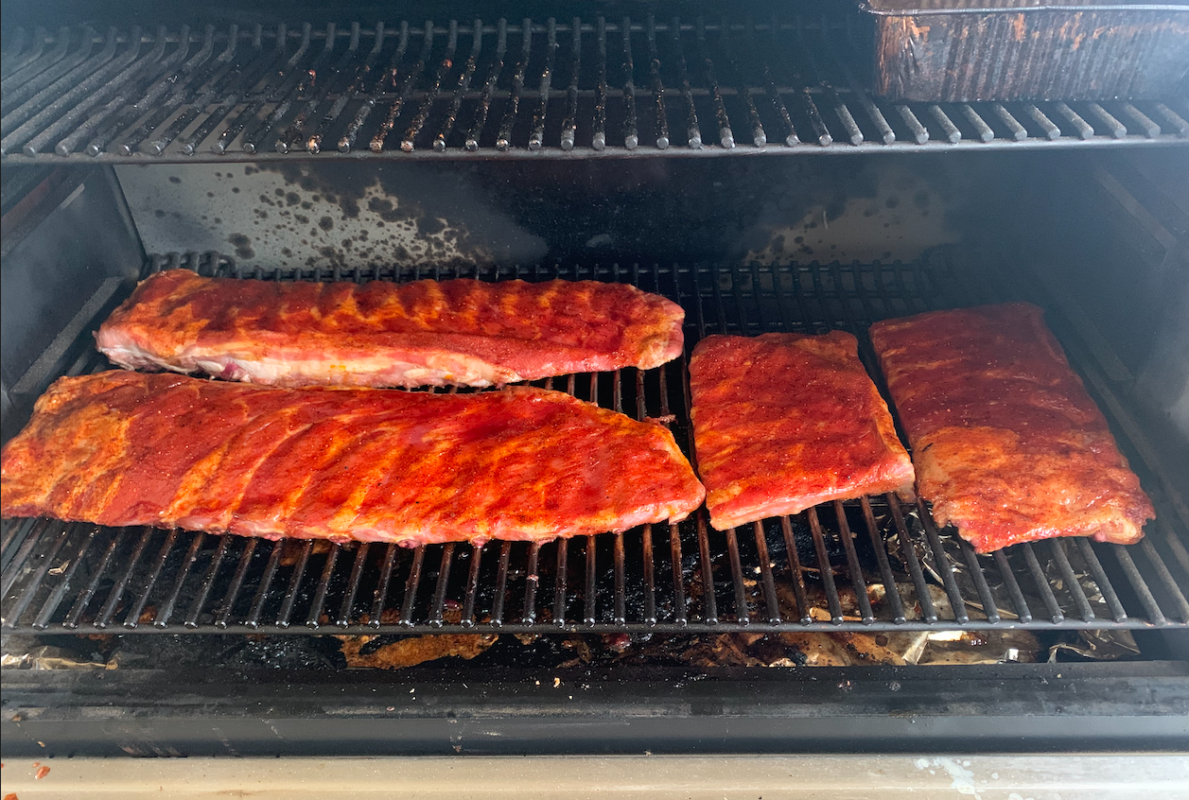
Fill the hopper with pellets, hickory, apple, or cherry all pair well with pork. Preheat the Traeger to 225°F. Place the ribs bone-side down on the grates.
Stage 1: Smoke Unwrapped Until the Bark Sets
- Baby back: roughly 3-4 hours total cook time
- Spare ribs: roughly 4-5 hours total cook time
Want the exact time to put them on? Plug your cut, smoker temp and dinner time into the Rib Cook Time Calculator and it works the whole timeline backwards — wrap, sauce, bend test and all.
Close the lid and let the smoker do the work. Starting around the 1-hour mark, spritz the ribs with apple juice (or apple cider vinegar, or a mix) every 30-45 minutes. This keeps the surface from drying out while the smoke ring develops and the bark firms up.
Resist the urge to peek constantly or flip the racks; there’s no need. Just let them ride until the color looks right and the surface has started to set.
Stage 2: Foil, Only If You Want It (30-45 Minutes Max)
This step is optional, and honestly, plenty of great racks skip it entirely. If you want a little extra tenderness or you’re trying to push through a stubborn stall, wrap the rack in foil with a splash of apple juice or beer for 30-45 minutes, not two hours. Any longer and the steam trapped inside starts breaking the meat down past tender into mushy, and it softens the bark you just spent hours building.
Think of foil here as a short tenderizing boost, not a required braising stage.
Stage 3: Finish Unwrapped and Sauce
Whether you wrapped or not, finish the ribs unwrapped on the smoker until they pass the bend test (see below). This is also your window to brush on BBQ sauce or a glaze if you want one; add it in the last 15 minutes so the sugar doesn’t burn, and let the direct heat tack it up rather than leaving it wet and runny.
How to Tell When Ribs Are Actually Done
This is the part that actually matters more than any stage timing. Don’t cook to the clock, cook to these two checks:
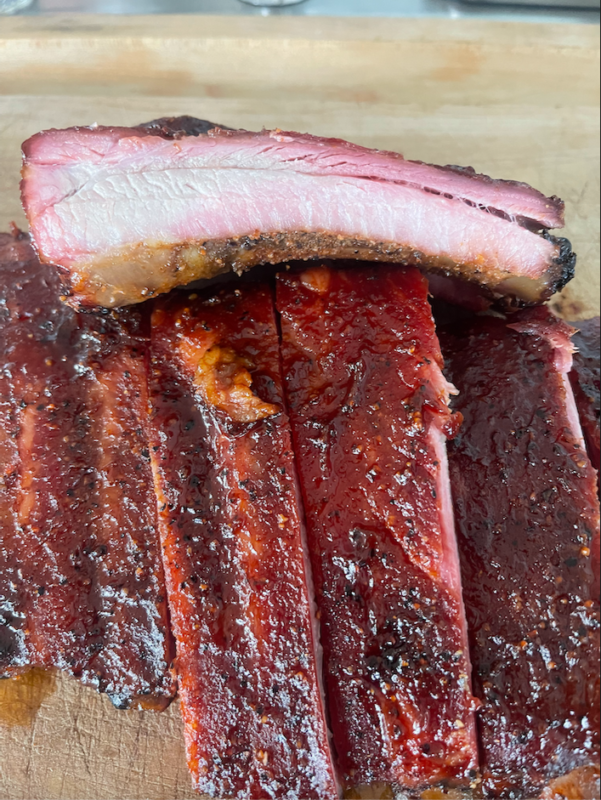
- The bend test. Pick up the rack with tongs from one end and let it hang. It should bend and the surface should crack slightly. If it stays rigid, it needs more time. This is the primary test; competition cooks lean on it more than a thermometer.
- Internal temp, as a rough guide. Somewhere around 200°F in the thickest part of the meat is typical for ribs that pass the bend test. But take it with a grain of salt: ribs are thin and full of bone, so a probe reading here is far less reliable than it is on a brisket or a pork butt. Use it to confirm what the bend test is already telling you, not as the primary signal. Unlike chicken, there’s no strict safety ceiling to worry about, pork is safe well below this range, so this is entirely about texture.
Every smoker, rack, and batch of ribs runs a little differently, so treat the times above as your target, and the bend test as your actual finish line.
Rest and Serve
Let the ribs rest for 10-15 minutes before slicing between the bones. This gives the juices a chance to redistribute so they don’t all end up on your cutting board instead of in the meat.
Recipe: Traeger Pork Ribs (Bend-Test Method)
Yields: 2 racks Prep: 15 minutes Cook time: 4-5 hours (spare ribs) or 3-4 hours (baby back) Smoker temp: 225°F throughout Target: Pass the bend test; internal temp around 200°F as a guide only
Ingredients
- 2 racks pork ribs (baby back or spare ribs)
- Sweet-savory rub: brown sugar, paprika, garlic powder, onion powder, salt, and pepper (or a pre-made rub like Meat Church Honey Hog)
- Apple juice, for spritzing and the optional foil step
- BBQ sauce or glaze of choice (optional)
Instructions
- Prep the ribs. Remove the membrane from the bone side and trim any loose fat flaps. Do not boil the ribs.
- Season. Apply rub generously to both sides of each rack.
- Preheat the smoker. Fill the hopper with hickory, apple, or cherry pellets and preheat to 225°F.
- Smoke unwrapped. Place ribs bone-side down. Smoke for 3-4 hours (baby back) or 4-5 hours (spare ribs) total, spritzing with apple juice every 30-45 minutes starting at the 1-hour mark.
- Optional foil boost. If you want extra tenderness, wrap each rack in foil with a splash of apple juice or beer for 30-45 minutes, no longer.
- Finish unwrapped. Remove from foil if used, brush with sauce if using in the final 15 minutes, and continue cooking uncovered until done.
- Check for doneness. Use the bend test as your primary check; internal temp around 200°F should roughly confirm it.
- Rest and serve. Rest 10-15 minutes, then slice between the bones.
Notes: These times are targets, not guarantees. A rack that passes the bend test early is done early, don’t force it to hit the clock. And if it’s not there yet at the high end of the range, keep going; the bend test outranks the timer.
If you’d rather not do the arithmetic, the Rib Cook Time Calculator will tell you what time to light the smoker.
FAQ
Why not use the 3-2-1 method for ribs? The two-hour foil stage in 3-2-1 was built for thick, tough cuts and pushes most pork ribs well past tender into mushy territory. It also softens the bark you spent hours building. Skipping the long foil braise, or cutting it down to well under an hour, gets you a better texture with a similar total cook time.
Should I remove the membrane before smoking ribs? Yes. The membrane on the bone side doesn’t render like fat does, so leaving it on creates a tough, chewy barrier between the smoke and the meat. Slide a knife under one end and peel it off before applying rub.
What temperature should pork ribs be smoked at? 225°F is the standard target for a low-and-slow rib cook on a pellet smoker. It’s low enough to render fat and connective tissue slowly without drying out the meat, while still finishing in a reasonable timeframe.
How do I know when ribs are actually done, not just cooked long enough? Use the bend test as your main signal: lift the rack with tongs from one end and let it hang. It should visibly bend and the surface should crack slightly. Treat an internal temp around 200°F as a supporting clue, not a hard target, since a probe reading on thin, bony ribs is less reliable than on a brisket.
Do I have to wrap ribs in foil? No. Plenty of great racks are cooked entirely unwrapped, which gives you a firmer bark and a bit more control over the final texture. If you do wrap, keep it short, 30-45 minutes, not the two hours some methods call for.
Is it true that boiling ribs first makes them more tender? It makes them softer, but at the cost of flavor. Boiling pulls fat, collagen, and seasoning out of the meat and into the water. What people are usually tasting when ribs “fall off the bone” is mostly sauce, not well-rendered pork. Aim for meat that tugs cleanly off the bone instead.
What’s the difference between baby back and spare ribs for smoking? Baby back ribs are smaller, leaner, and cook faster, roughly 3-4 hours total. Spare ribs are larger and meatier, taking closer to 4-5 hours, but reward the extra time with more fat rendering and a meatier bite. St. Louis cut (spares with the tips trimmed) is the meatiest and most competition-friendly cut of the three.